PaceTwo days suits most people: a morning boat trip to the Zege peninsula and one island, an afternoon at the falls, and a slower lakeside day to recover from the highlands. Other plates in this section.
Lake Tana fills a broad basin in the north-western highlands, and the Blue Nile, the Abay, leaves it at its southern shore beside the town of Bahir Dar. Scattered round the lake, on islands and on the forested Zege peninsula, are some thirty-odd churches and monasteries, many of them round buildings with thatched or tin roofs and walls painted inside with saints and stories. A boat trip to a few of them, and the drive to the falls downstream, make up the classic visit.
Bahir Dar, the lakeside base
Bahir Dar is a broad, green city of palm-lined avenues on the south shore of the lake. It is a comfortable place to slow down after the higher towns of the north, and most visitors stay two nights. Boats leave from the town's lakeside jetties; agree the route, the time on the water and the price before you set off, and make sure there are life jackets on board. Along the outlet of the river, close to town, you may see hippos in the early morning, and the lake shore is rich in birds.
The town sits at about 1,800 metres, lower and warmer than Gondar or Lalibela. Domestic flights land at the airport just outside town, and the road from Gondar runs south along the eastern side of the lake.
The Zege peninsula churches
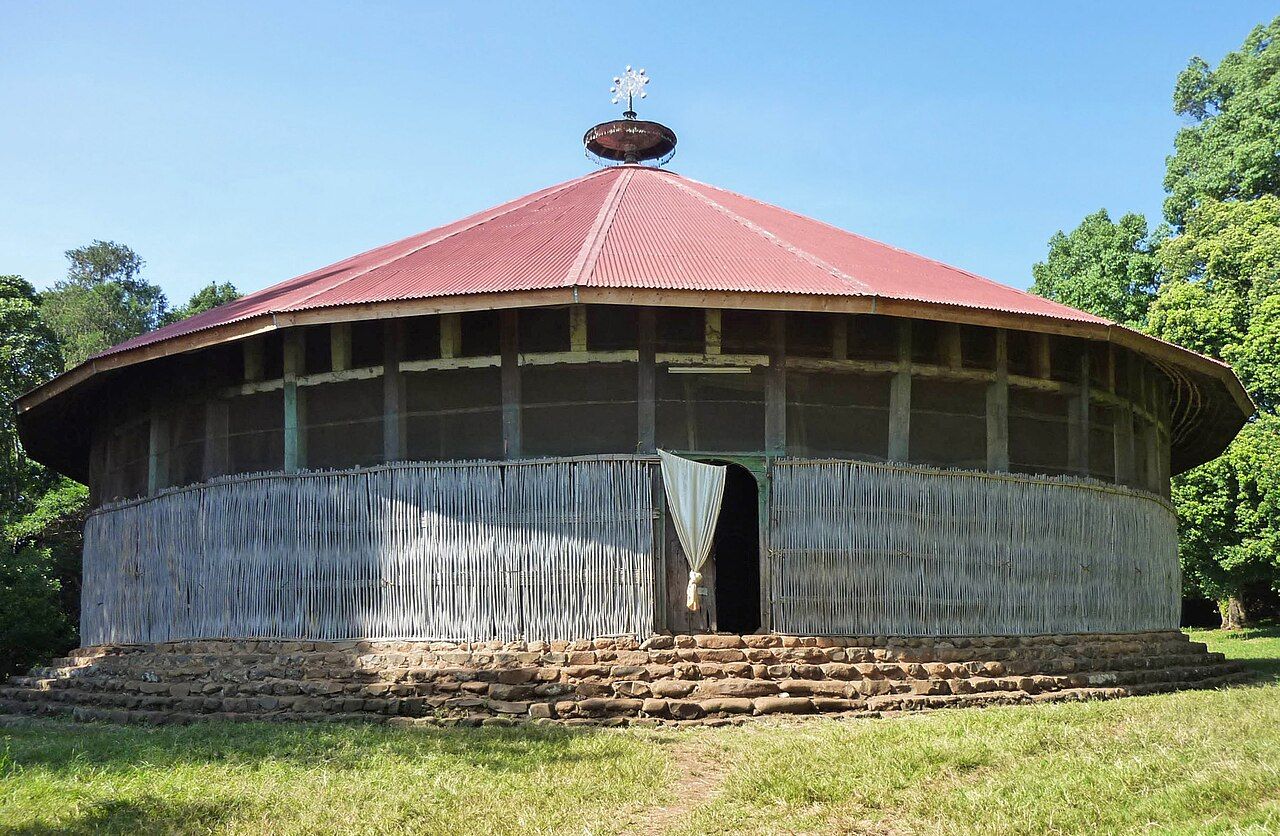
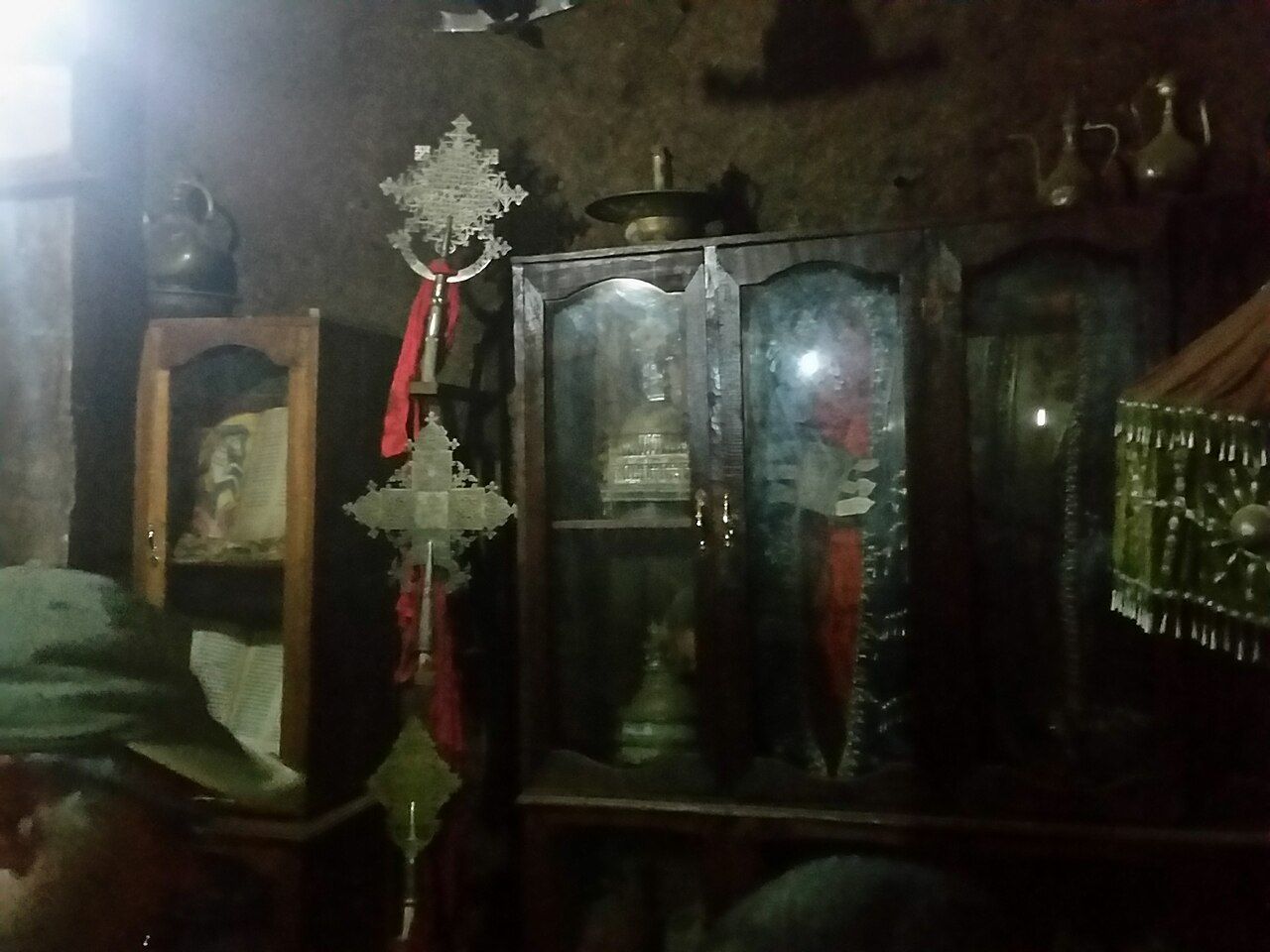
The most visited churches lie on the Zege peninsula, a short boat ride across the southern end of the lake, where a path climbs through coffee bushes and forest from the landing. Ura Kidane Mehret is the best known: a large round church whose inner walls are covered with paintings in bright colours, with scenes from the Bible and the lives of Ethiopian saints. Nearby, Azwa Maryam and other churches have their own painted interiors, and some keep small museums of crowns, crosses and manuscripts. Ura Kidane Mehret and the other Zege churches are open to women as well as men.
Inside, take your shoes off, keep your voice low and ask before you photograph anything. A small fee is usually charged at each church; carry small notes.
Island monasteries, and who may enter
Further out, the island monasteries keep stricter rules, and several admit men only. Kebran Gabriel, on a small island close to Bahir Dar, has long been closed to women. Daga Estefanos, further north, is a men-only monastery known for keeping the remains of several medieval emperors, and Tana Qirqos, on the eastern side, is men only too, with a tradition that the Ark of the Covenant rested there for centuries before it went to Axum. Women on a group trip usually wait at the landing or on the boat at these islands.
If you want churches open to everyone, the Zege group and Narga Selassie, an eighteenth-century church on Dek island founded by Empress Mentewab, are the common choices. Rules can change, so ask at the jetty or of your guide before you plan a long trip out to an island you cannot enter.
 Plate 03 · AxumAxum and the field of standing stones
The tankwa, a papyrus boat
Watch the water and you will see narrow boats made of bundled papyrus reeds, curved up at the ends, being paddled by a single person standing or kneeling. These are tankwa, built from reeds that grow along the shore, and they have been made in much the same way for a very long time. They are used for fishing and for carrying firewood and goods across the lake, and they float low and become waterlogged after a while, so they are rebuilt often. Ask before you photograph the people paddling them.
The Blue Nile Falls
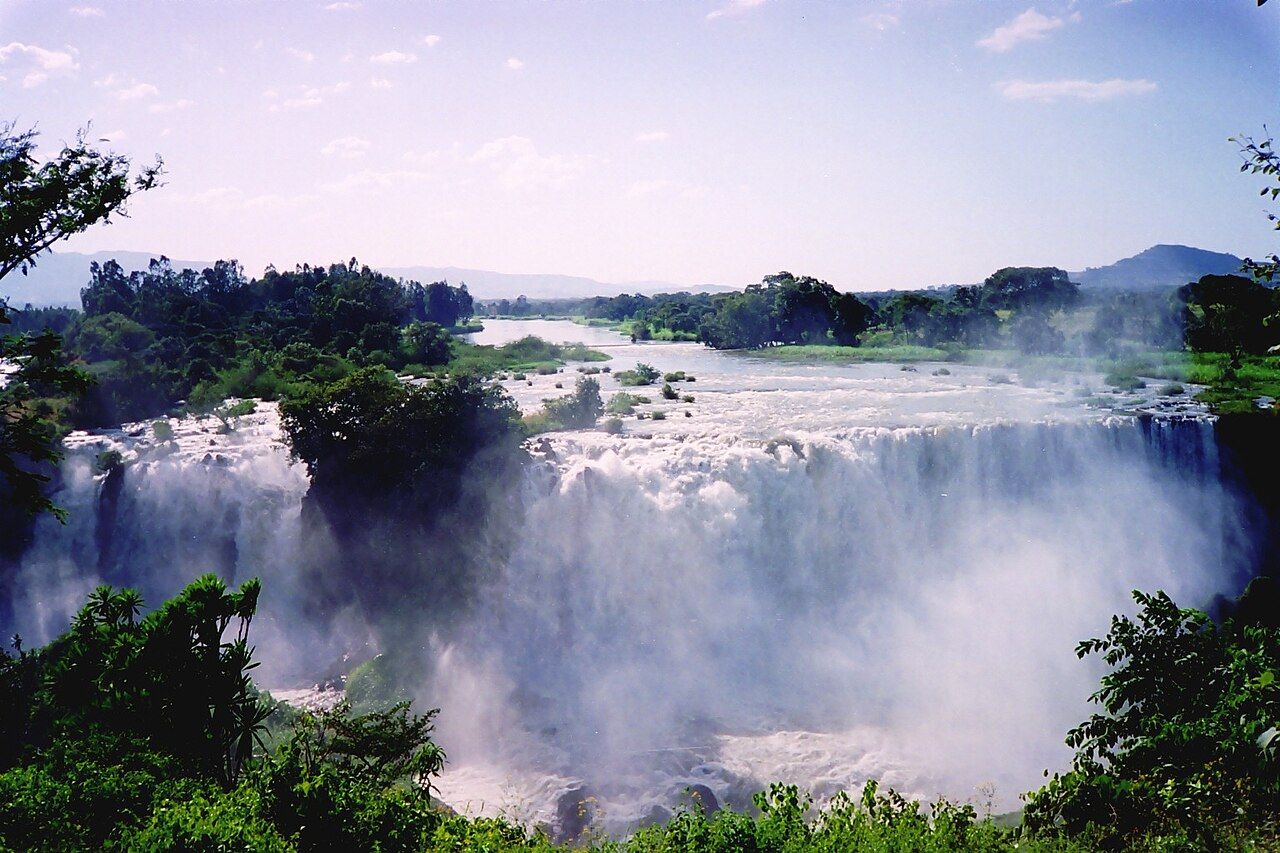
About thirty kilometres south-east of Bahir Dar, near the village of Tis Abay, the Blue Nile drops over a basalt ledge into a narrow gorge. The falls are called Tis Issat, smoking water, after the spray they once threw up, and at full flow they were among the most impressive in Africa. The walk to the viewpoints crosses an old stone bridge, often said to date from the seventeenth century, then climbs a hillside with views of the falls; a return route crosses a suspension bridge below them.
Be ready for something smaller than the old photographs. A hydroelectric scheme near the falls diverts much of the river's water through turbines, and a weir at the lake outlet regulates the flow leaving Lake Tana. For much of the year the falls are a few thin strands over the rock, and at times there is very little. The flow is usually stronger in and just after the rainy season, roughly from July to October, and on some days more water is let over the falls than on others. Treat the walk, the gorge and the farmland around it as the main reward.
A morning on the water, an afternoon at the falls
Most people combine a half-day boat trip with an afternoon at the falls. Boats can be cold and windy in the morning and hot by midday, so bring layers, a hat and sun cream. The paths on Zege and at the falls are short but steep in places and muddy in the rains. Children and touts may follow you on the walk to the falls; a firm, polite answer is enough.
Dress modestly for the churches, with covered shoulders and knees and a scarf for women. Bahir Dar lies in the Amhara region, which has seen armed conflict in recent years. From here, the road north leads to Gondar and the Simien Mountains, and the northern loop shows how the lake fits into a longer trip.
Images on this page: Bernard Gagnon (CC BY-SA 3.0); CT Snow from Hsinchu, Taiwan (CC BY 2.0); RNLockwood (CC BY-SA 4.0); Rod Waddington from Kergunyah, Australia (CC BY-SA 2.0).


