PaceGive Konso one full day: a walled town in the morning, the terraces and the museum later. Heat builds by midday, so start early. Other plates in this section.
On the dry hills south of Arba Minch, the Konso people have spent centuries turning steep land into farmland. Terraces of dry stone climb the slopes, walled towns sit on the hilltops, and the towns are organised around communal houses, ritual poles and memorials carved from wood. UNESCO listed the Konso Cultural Landscape as a World Heritage Site in 2011. It is a working landscape, not an open-air museum, and visiting it well depends on remembering that.
A landscape built by hand
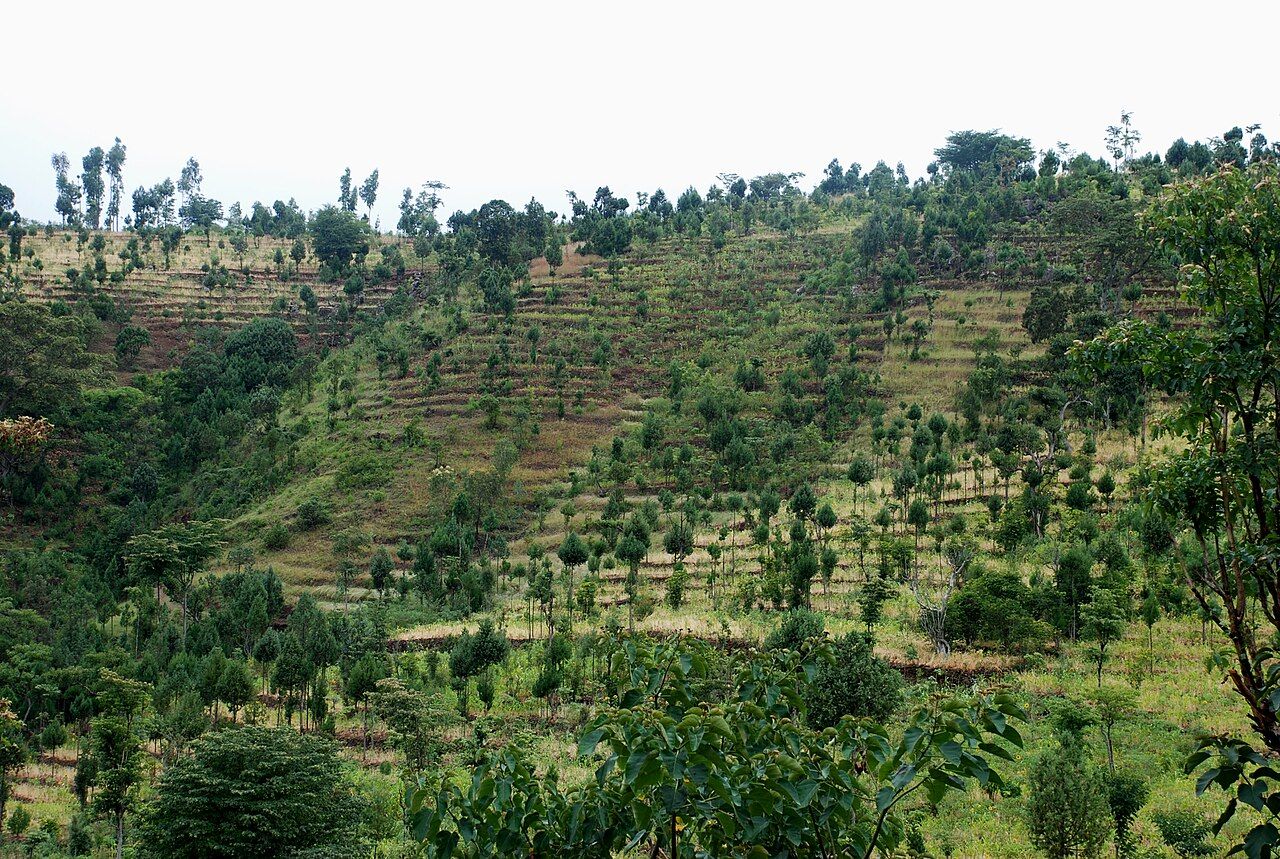
Rain in Konso is unreliable and the soils are thin, so every slope that can be farmed has been held in place with stone. The terraces follow the contours of the hills, some only a few paces wide, each wall packed without mortar. They hold back soil and slow water, and they are rebuilt after every heavy storm. Sorghum and maize grow on them along with beans, cotton and trees grown for their edible leaves, especially moringa.
Seen from a ridge, the result is a whole countryside shaped by human hands. Walking through it, the scale becomes personal: each wall is maintained by a family, and much of the work is shared through labour groups that move from field to field. Keep to the paths between fields and do not climb on the walls.
Walled towns and the mora
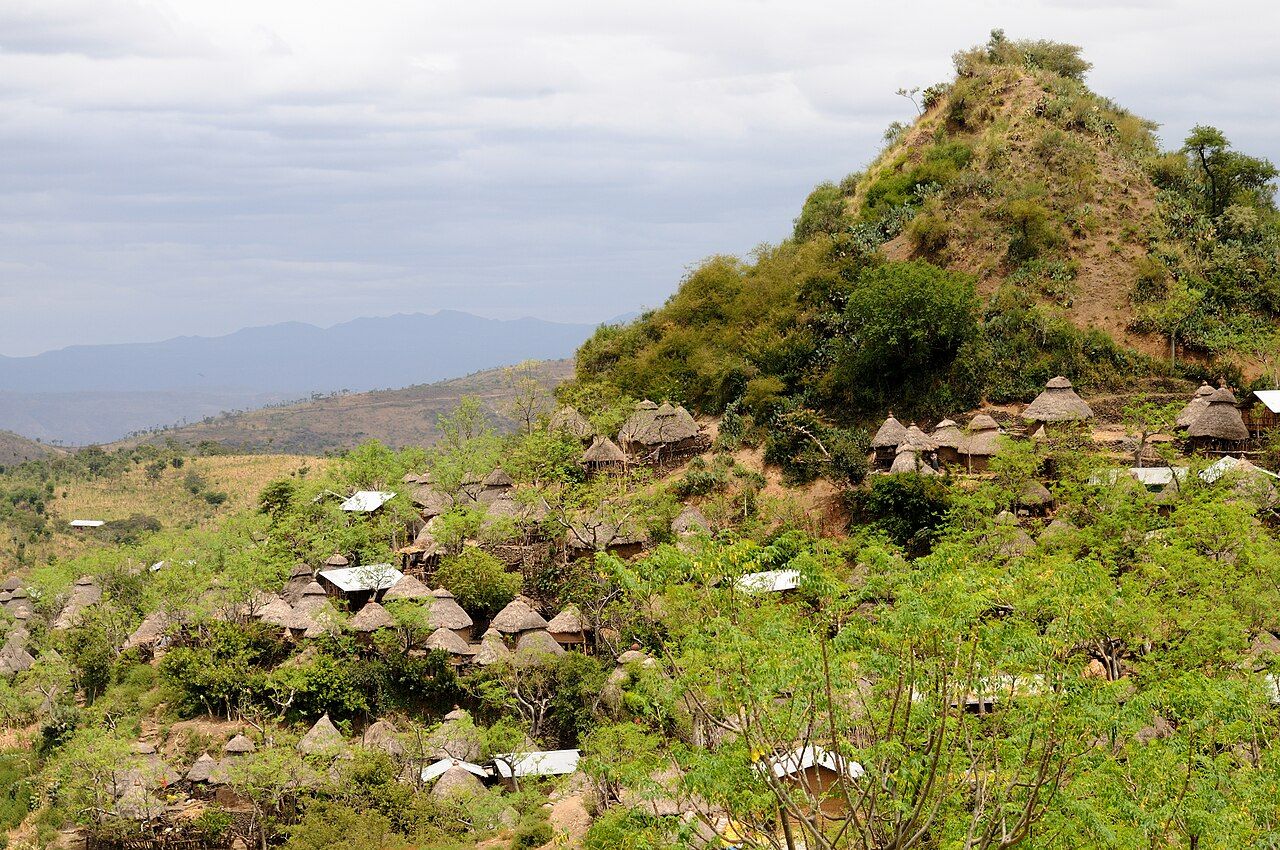
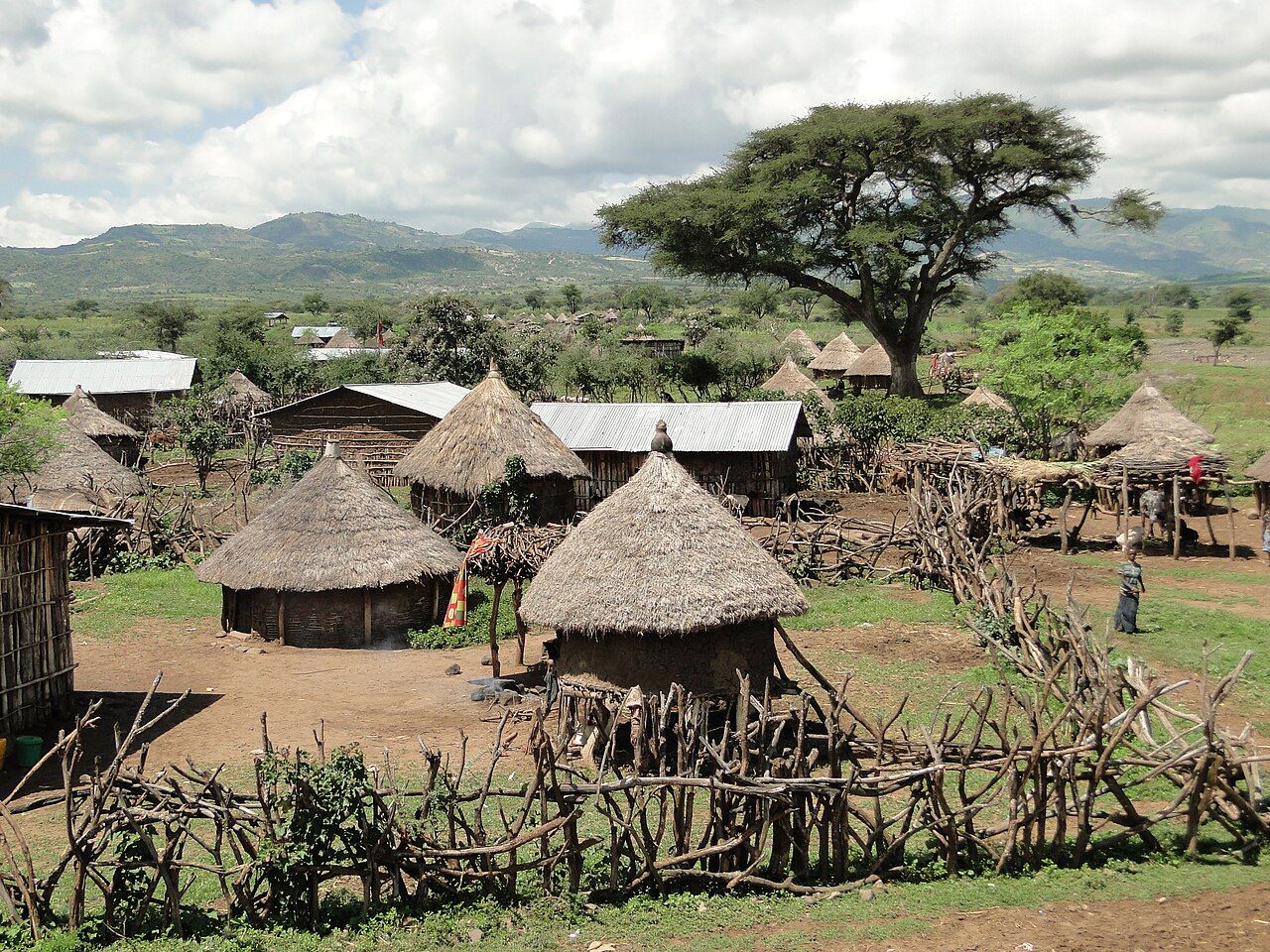
Konso towns are built on high ground and ringed by stone walls, often more than one, with narrow gated passages between the compounds. The layout was defensive, and inside, the lanes twist between fenced homes, granaries and open spaces. Each town is divided into wards, and each ward has a mora: a communal house with a raised sleeping platform and an open space in front where men gather, talk, settle disputes and keep watch. Boys and young men traditionally sleep in the mora, which also acts as a guardhouse.
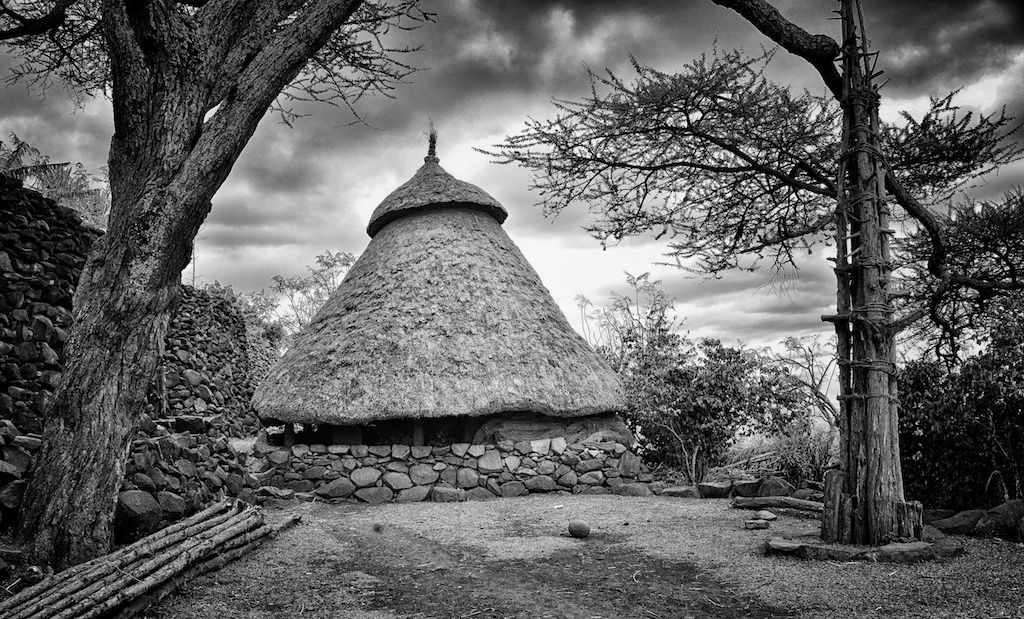
The open ground by a mora is a public space, and visitors are often led there first. It is also where people meet and rest. Watch what your guide does, sit only where you are invited to sit and keep your voice low.
Generation poles
In many Konso towns you will see clusters of tall wooden poles standing in a public space. These are generation poles, raised during the ceremonies that mark the passing of authority from one generation grade to the next, a transition that comes roughly every eighteen years. Counting the poles gives an idea of how long a town has stood on its site. Your guide can explain which grade is in charge and what the poles mean in that particular town; practice varies from place to place. Treat the poles and the ground around them as you would a monument, and do not lean on them or touch them.
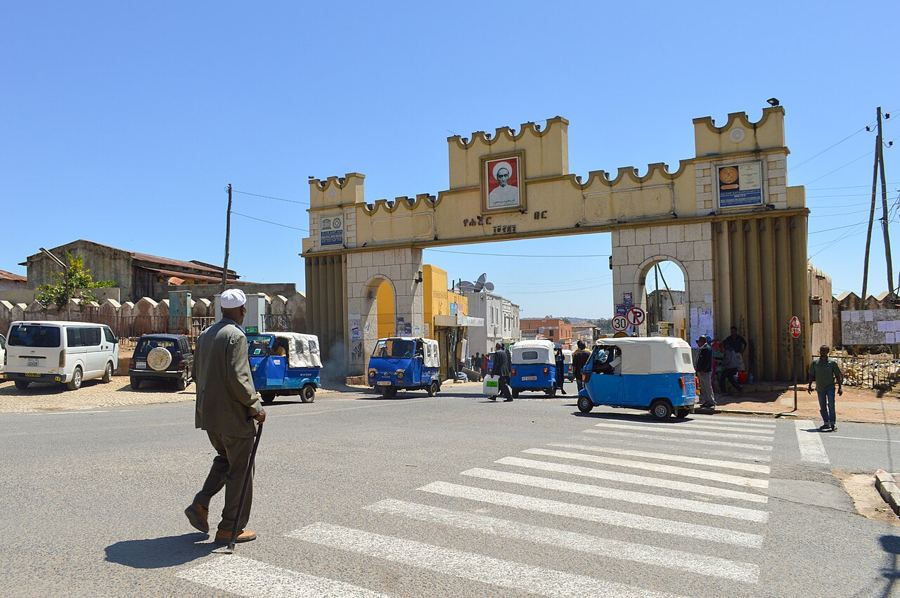 Plate 14 · HararHarar Jugol, the walled city of the east
Waka: the carved grave markers
The best-known Konso carvings are the waka, wooden figures set up to honour a man of standing after his death, usually a man known for bravery. The main figure is often shown with his wives and with the enemies or dangerous animals he overcame, all in a stylised form with prominent eyes and teeth. Waka once stood in groups by the roadsides and fields.
Many were stolen for the international art market in recent decades, and that loss is a sore point. Some have been returned and are now kept in the museum in Konso town, where you can see them up close with explanations of their meaning. Seeing the museum first gives you a frame for what you meet in the towns. Never offer to buy a waka or anything presented as one; genuine pieces are part of a family's and a community's heritage.
Visiting with respect
Visits to the towns are usually arranged through a local guide, with a community fee paid at the start. Carry small notes. The guide is not optional decoration: they know which areas are open to visitors, which households are happy to be visited and when a ceremony means you should stay away.
- Ask before photographing any person, and accept a no.
- Do not hand out money, pens or sweets to children; support the community through the fee and local purchases instead.
- Stay out of homes and compounds unless you are invited in.
- Dress modestly and avoid entering sacred spaces your guide steers you away from.
Weekly markets in the Konso area draw people from surrounding towns and are lively places to buy cotton cloth, tools and food. They are also busy working markets, so keep your bag close, watch where you stand with a camera and avoid blocking stalls.
Getting there and pacing the day
Konso lies on the road south of Arba Minch, a drive of a couple of hours, and it is a natural stop on the way to or from the Omo Valley. Most travellers reach it after the Rift Valley lakes and Arba Minch, as part of a wider southern loop. The guide to planning an Ethiopian circuit covers how the south fits with the rest of the country.
The dry months from October to February are the most comfortable time to walk the terraces, though the hills turn green and the fields are busiest after the rains. Start early: the walled towns are best explored before the midday heat, with the museum and a drive through the terraces later in the day. If you have time for two towns, choose ones that differ in size and setting, and let your guide suggest them. Meals in the area lean on sorghum, beans and the leafy greens grown on the terraces, a reminder that the food on your plate and the walls on the hillside belong to the same system.
Images on this page: JosepMGracia (CC BY-SA 4.0); Rod Waddington (CC BY-SA 2.0); JosepMGracia (CC BY-SA 4.0); Rod Waddington (CC BY-SA 2.0); Bernard Gagnon (CC BY-SA 3.0); Francisco Anzola (CC BY 3.0).


