PaceArrive two days early and stay a day after. Festival days start before dawn and run late, and towns fill up, so plan rest around them. Other plates in this section.
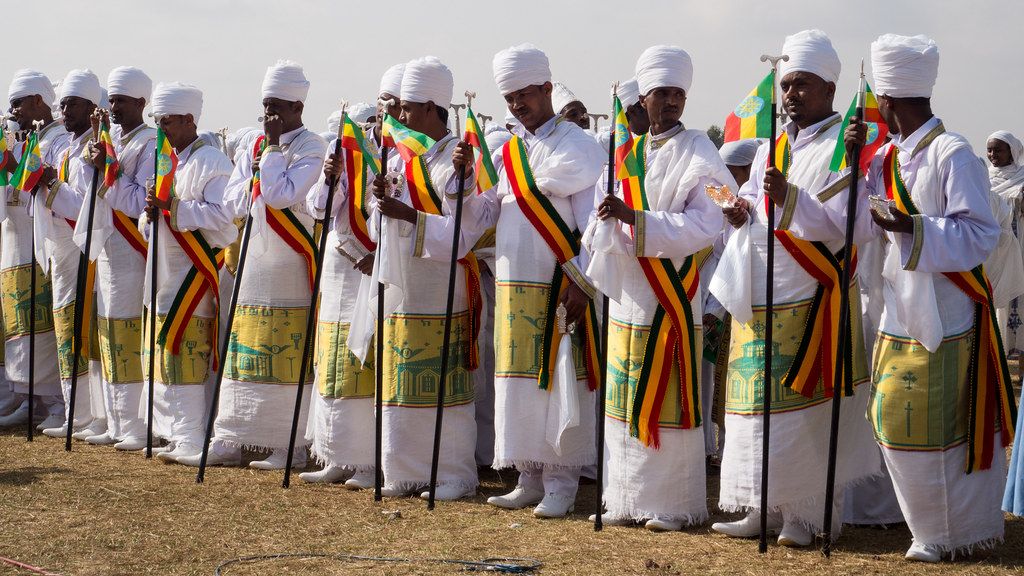
The Ethiopian Orthodox Church keeps its own calendar, and its great feasts are public events that fill streets, squares and riverbanks. Three of them draw most visitors: Genna, the Christmas feast, in early January; Timkat, the celebration of the baptism of Christ, less than two weeks later; and Meskel, the Finding of the True Cross, at the end of the long rains in September. They are religious celebrations first, and the best way to see them is as a respectful guest.
Three dates to know
Because the festivals follow the Ethiopian calendar, their Gregorian dates are almost fixed but shift by one day in some years. As a rule of thumb:
- Genna falls on 7 January.
- Timkat falls around 19 January, and on 20 January in leap years.
- Meskel falls around 27 September, with the Demera bonfire on the evening before.
Towns that host the biggest celebrations fill up weeks or months in advance, and domestic flights and road transport get busy around these days. The guide to the Ethiopian calendar and clock explains why the dates move.
Timkat: the tabots go to the water
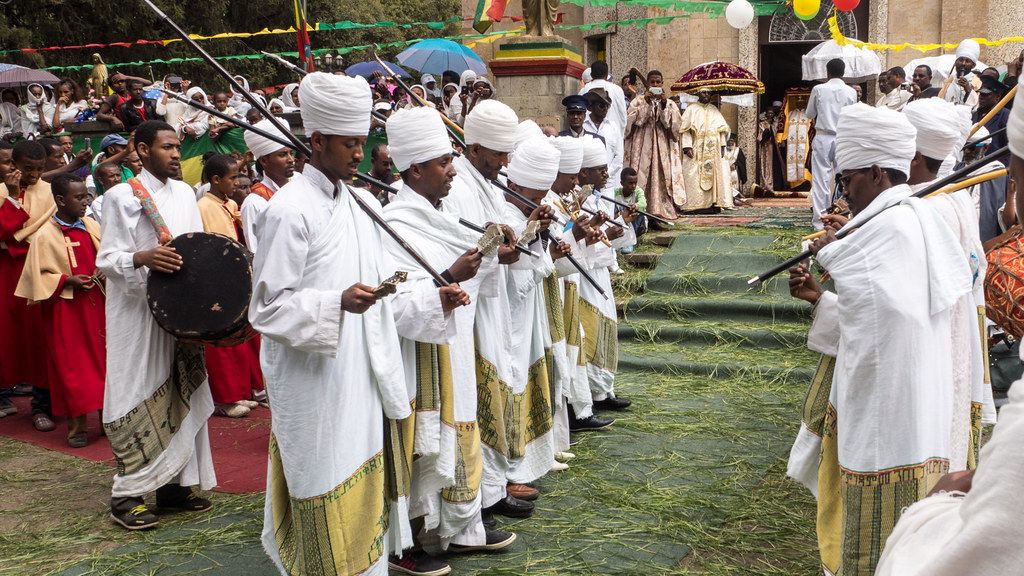
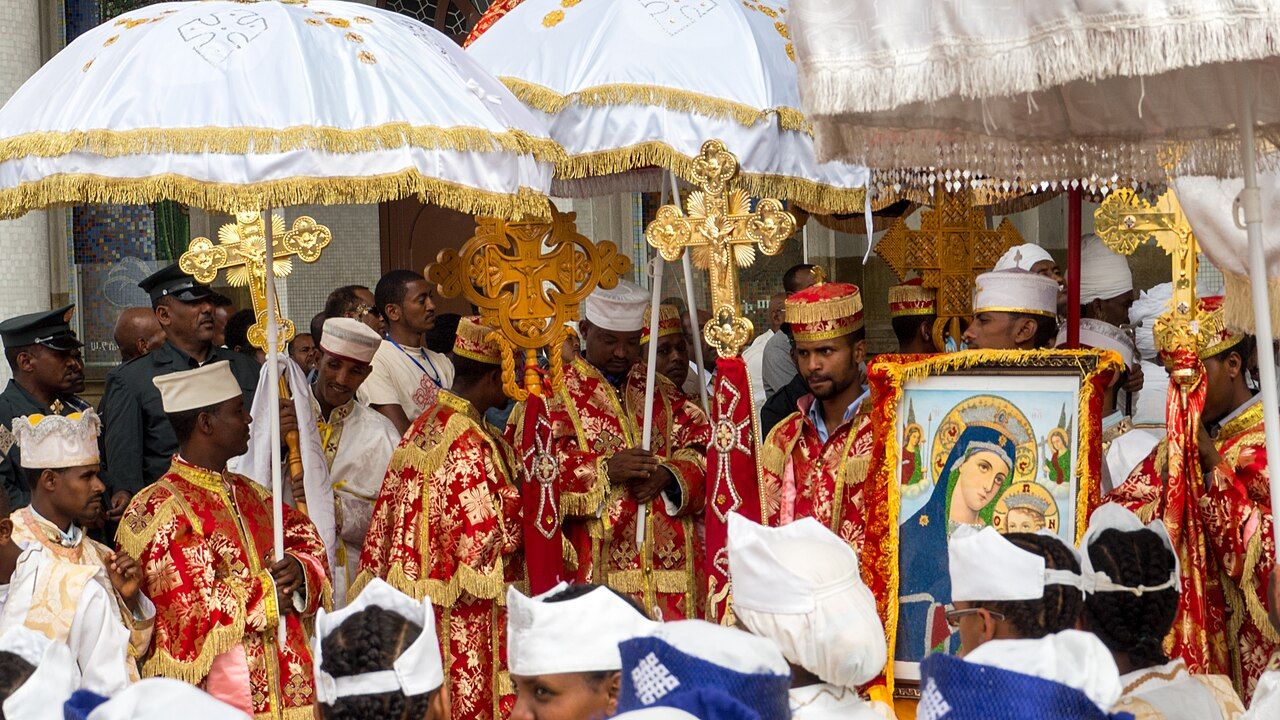
Every Orthodox church holds a tabot, a consecrated tablet representing the Ark of the Covenant, kept wrapped in cloth and never shown. On the eve of Timkat, priests carry the tabots out of their churches on their heads, under embroidered cloths and umbrellas, in procession to a pool, river or open ground near water. Crowds dressed in white walk with them, singing, drumming and chanting, while priests in brocade robes carry crosses and incense.
The tabots rest overnight in tents by the water while services and vigils continue. Before dawn the main ceremony begins: prayers, the blessing of the water and the sprinkling of the crowd, with many people pressing forward to be splashed or to bathe. Later in the day the tabots are carried back to their churches in further processions, with dancing and singing along the route. In many places the festivities continue into a third day for the feast of Saint Michael.
Where to see Timkat
Gondar holds the best-known celebration, centred on the pool beside Fasilides' Bath, which is filled with water for the occasion. After the blessing, crowds jump into the pool, and the scene is joyful and crowded. In Lalibela, processions wind between the rock-hewn churches and down to a pool, and the setting gives the day great solemnity. In Addis Ababa, the main gathering is at Jan Meda, a large open ground in the north of the city, where tabots from many churches meet.
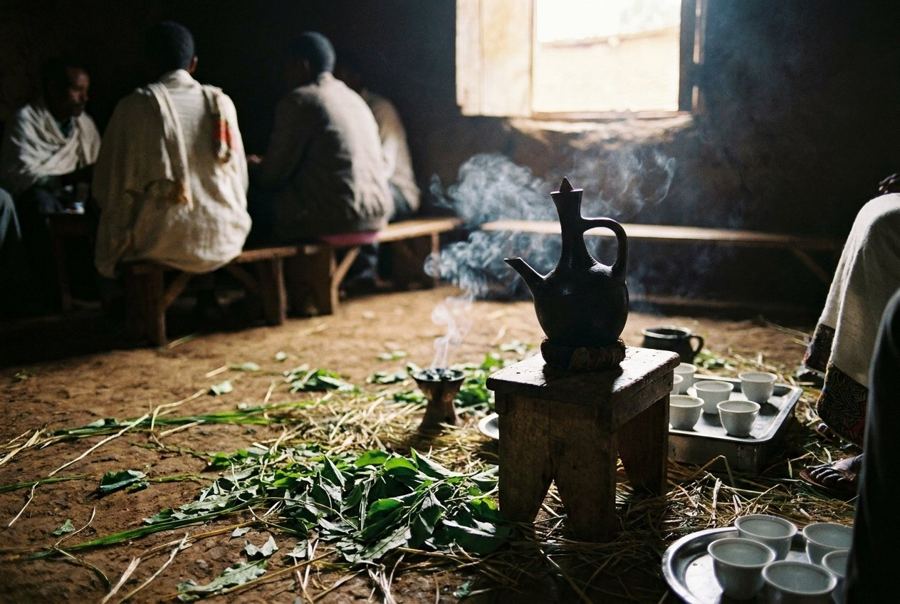 Plate 16 · KaffaCoffee, from the forest to the ceremony
Smaller towns and villages celebrate too, and a local Timkat can feel more intimate than the famous ones, with fewer visitors and more space. Timkat was added to UNESCO's list of the intangible cultural heritage of humanity in 2019.
Wherever you watch, arrive at the waterside early on the morning of the blessing to find a place to stand, and expect the best moments to come at first light. The processions on the eve, in the late afternoon, are easier to follow and less crowded, and they are often the most photogenic part of the festival.
Meskel and the Demera
Meskel commemorates the finding of the cross on which Christ was crucified, told in tradition as the work of Empress Helena, who followed the smoke of a fire to the place where the cross was buried. It falls at the end of the long rains, when the highlands are green and yellow Meskel daisies cover the hillsides.
On the eve of Meskel, people build a great conical pile of wood, the Demera, topped with a cross and decorated with daisies. After prayers, songs and processions, it is set alight. In Addis Ababa the main Demera stands in Meskel Square, where clergy, choirs and huge crowds gather in the late afternoon, and the lighting comes after dusk. Smaller bonfires burn in towns and neighbourhoods across the country. Where and how the Demera falls as it burns is read by some as a sign for the coming year. Meskel was inscribed on UNESCO's intangible heritage list in 2013.
Genna
Genna is the Christmas feast, preceded by a period of fasting. On Christmas Eve, people attend services that run through the night and into the early morning, many dressed in white. Lalibela draws pilgrims from across the country, who walk for days to reach it, and the night services there, with priests chanting on the rock above the crowds, are a deeply moving sight. After the services, the fast is broken with a family meal. The name Genna is also used for a traditional stick-and-ball game played around this time.
Being a good guest in the crowd
These are acts of worship as well as spectacles. Visitors are generally welcome, and the following helps you stay that way:
- Dress modestly; a white scarf or shawl blends in and shows respect.
- Keep out of the path of processions and never step in front of priests carrying tabots.
- Ask before photographing individuals, and never use flash during services.
- Do not climb on walls, church structures or sacred areas for a better view.
- Expect long hours on your feet in the sun by day and the cold at night in the highlands.
- Crowds are dense: keep valuables close and agree a meeting point with companions.
If you are fasting along with your hosts or simply eating out during these weeks, the guide to injera and the fasting table explains what you will find on the menu before each feast and what changes once it is broken.
Images on this page: jeanotr (CC BY 2.0); jeanotr (CC BY 2.0); Jean Rebiffé (CC BY 4.0).
